

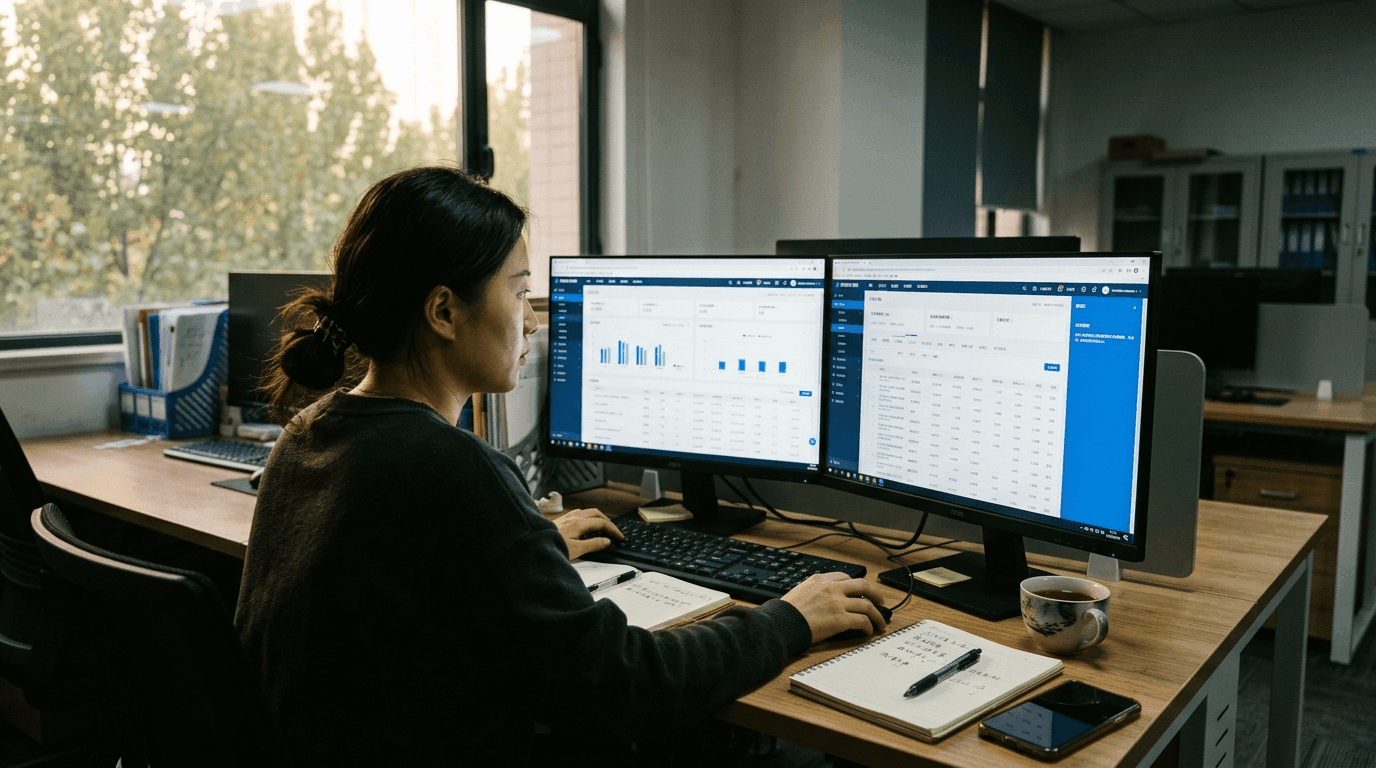
Your China media budget deserves a senior team. We plan it, buy it, run it.
The same people who build your account are the ones still on it at the monthly review. No layers, no handoffs, no junior account manager learning the platforms on your money.
Most brands come to us in one of three spots.
One of these is probably you. The plan looks different for each, but the team running it is the same.
You're launching in China
No accounts, no data, no history. You need someone to build the whole thing and get it running, without burning the first three months figuring out which platform does what.
You're already spending, and it isn't working
Campaigns are live, maybe through another agency, and the numbers don't add up. You need a team to take it apart and rebuild it properly.
You're scaling
The basics work. Now you want to push, new platforms, bigger budgets, livestreaming, eCommerce media. What you need is senior hands, not three more juniors.
We do all three. The plan looks different for each.
Two areas, one team.
We run paid media on the platforms that matter in China. Each one works differently. Each one needs its own plan, its own creative, its own bidding logic. We know them because we're in the accounts every day, not because we read a case study about them.
WeChat Ads
Moments ads, Official Account banners, Mini Program placements, Search ads. When you have CRM data, we build the targeting around it. When you don't, we work from lookalikes. The creative is made in-house, in Chinese, by people who write for Chinese readers.
Douyin Ads
In-feed video, TopView, Brand Challenges, Search ads, and the full Qianchuan toolset for live commerce. We test creative every week. We cut what fails and put money behind what works. Most clients see their CPM settle within the first month.
RED (Xiaohongshu) Ads
Feed ads, search ads, KOC seeding, KOL amplification. RED rewards content that reads like a real person wrote it. We make that content. Posts that read like ads get buried.
Baidu SEM
Search ads, Baidu Brand Zone, the display network, SEO. Baidu still matters for high-intent search, especially in B2B, automotive, finance, education, and luxury.
Bilibili and Kuaishou
Younger audiences, smaller cities, gaming, anime, lifestyle. We use these when they fit the brand. We don't pad a plan with channels you don't need.
Programmatic and display
Tencent Ads, ByteDance Ads, Alibaba UniDesk. Cross-platform retargeting, lookalike modeling, and frequency caps that respect a user's attention.
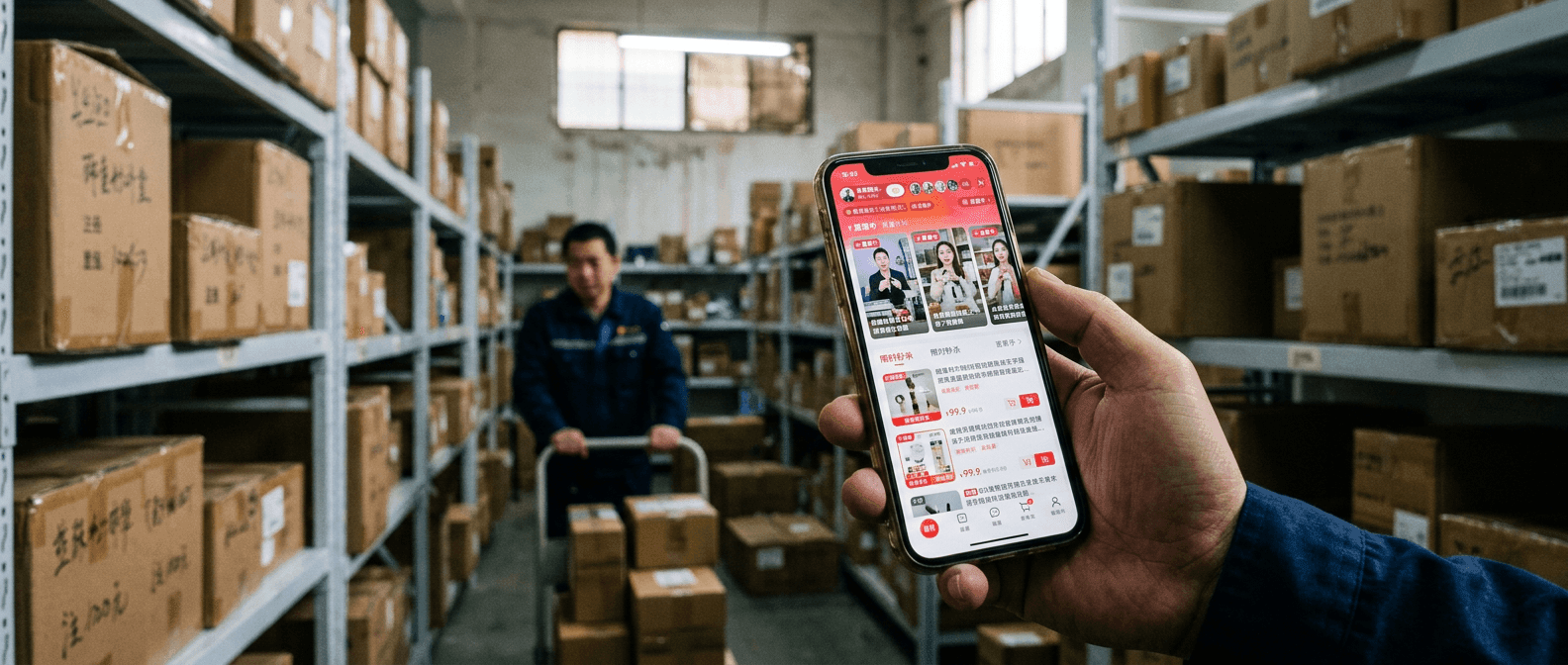
This is where paid traffic turns into sales. If you're selling in China, this is usually where the budget should go first, before the brand-awareness line items.
Tmall Ads
Zhitongche, the "through train," for keyword-based product ads. Wanxiangtai, "Super Express," for AI-driven bidding across the Alimama network. Diamond Booth for high-traffic banners. We plan spend against sales and return targets, not impressions. That covers the daily upkeep, the pre-sale ramp, and the all-out push around the big shopping festivals: 618 in June, Double 11 in November, Chinese New Year.
JD Ads
JD Express, or Kuaiche, for search-driven product ads. Haitou, "Sea Throw," for AI-optimized placements across JD's traffic pools. JD Zhanwai for off-platform retargeting. JD shoppers behave differently from Tmall shoppers, more decisive, more brand-loyal, and they skew toward electronics and home goods. We bid for that, not against a generic template.
Douyin eCommerce Ads
Qianchuan is the engine. It pushes paid traffic into product videos, live rooms, and store pages. We run it for clients with the right margins and a steady content cadence: boosting live rooms during peak hours, putting money behind videos that are already working, building campaigns that walk a viewer from interest to checkout.
RED eCommerce Ads
Juguang promotes product-linked notes and live streams. RED's commerce side is younger than Douyin's, but it's growing fast, skincare, fashion, niche fragrance, home. Paid amplification of seeded KOC content usually beats a straight brand ad here.
Most media agencies staff your account with juniors. We don't.
The team that signs the contract is the team that runs the work. Same names on the kickoff call, same names on the monthly review.
One team, start to finish
The person who writes your media plan is the person buying your ads. Your senior strategist doesn't vanish after the kickoff call and leave you with someone you've never met.
Media and store, run together
Most agencies split media buying and store operations across two teams. Sometimes two companies. That gap is exactly where return on investment leaks out. We keep them under one roof, so traffic, conversion, and product-page work all move together.
You own everything
The accounts, the data, the pixels, the audiences. All in your name, all yours to keep. Leave whenever you like and you take the lot with you.
Compliance built in, not bolted on
We get the legal side right before anything goes live. In China the alternative is rejected ads, suspended accounts, and fines, and we've cleaned up enough of those to take it seriously.
The team that builds your account is the team still running it at the monthly review. In China that continuity is the difference between spend and waste.
Four weeks to live, then a weekly rhythm.
One team. Strategy, media planning, creative, buying, optimization, reporting, all of it in-house and all of it senior.
Audit and KPIs
We go through your current setup, your assets, your data. We set KPIs that actually mean something instead of the ones that just look good in a report.
A clean baseline. You know exactly what is working today, what is leaking budget, and what we are going to fix first.

- Account audit across every platform you are running
- Creative, targeting and bidding review
- KPI definition tied to revenue, not vanity metrics
- Tracking and attribution health check
- Audit report with prioritized fixes
- KPI framework agreed in writing
Build the plan
We build the plan: platform mix, budget split, creative brief, and how we'll measure the whole thing.
A media plan you can actually defend internally, with the math behind every line.
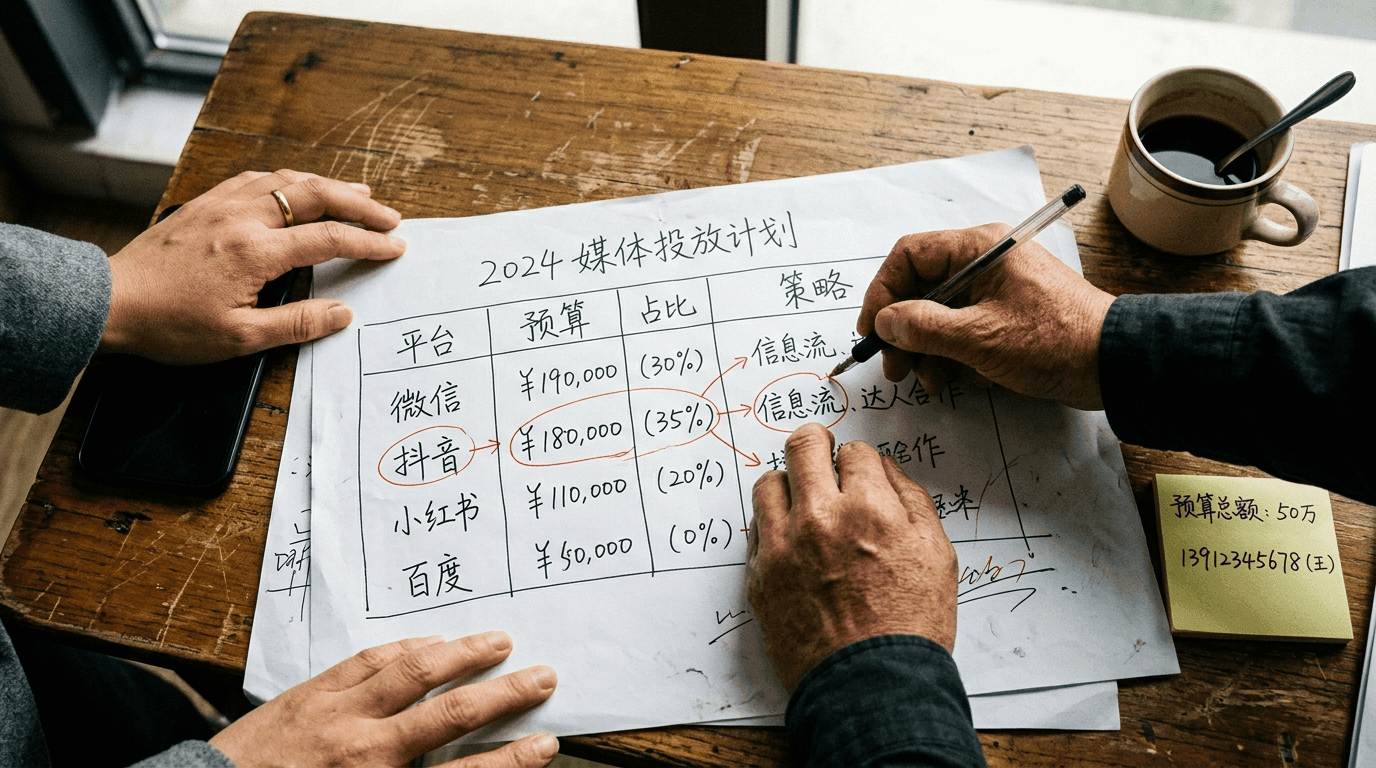
- Platform mix and budget split by phase
- Creative brief for each platform
- Test plan, measurement plan, reporting cadence
- Compliance pre-check on every claim and headline
- Media plan deck
- Creative brief and production schedule
Go live
We go live. Creative produced, accounts set up, tracking in place.
Campaigns running on the platforms that matter, with the tracking already proving they work.

- Creative produced and platform-specced
- Ad accounts set up under your name
- Tracking pixels, UTMs and platform conversions live
- Day-one bidding, budget pacing and frequency caps
- Live campaigns across the platforms in plan
- Tracking confirmation and pacing report
Optimize and report
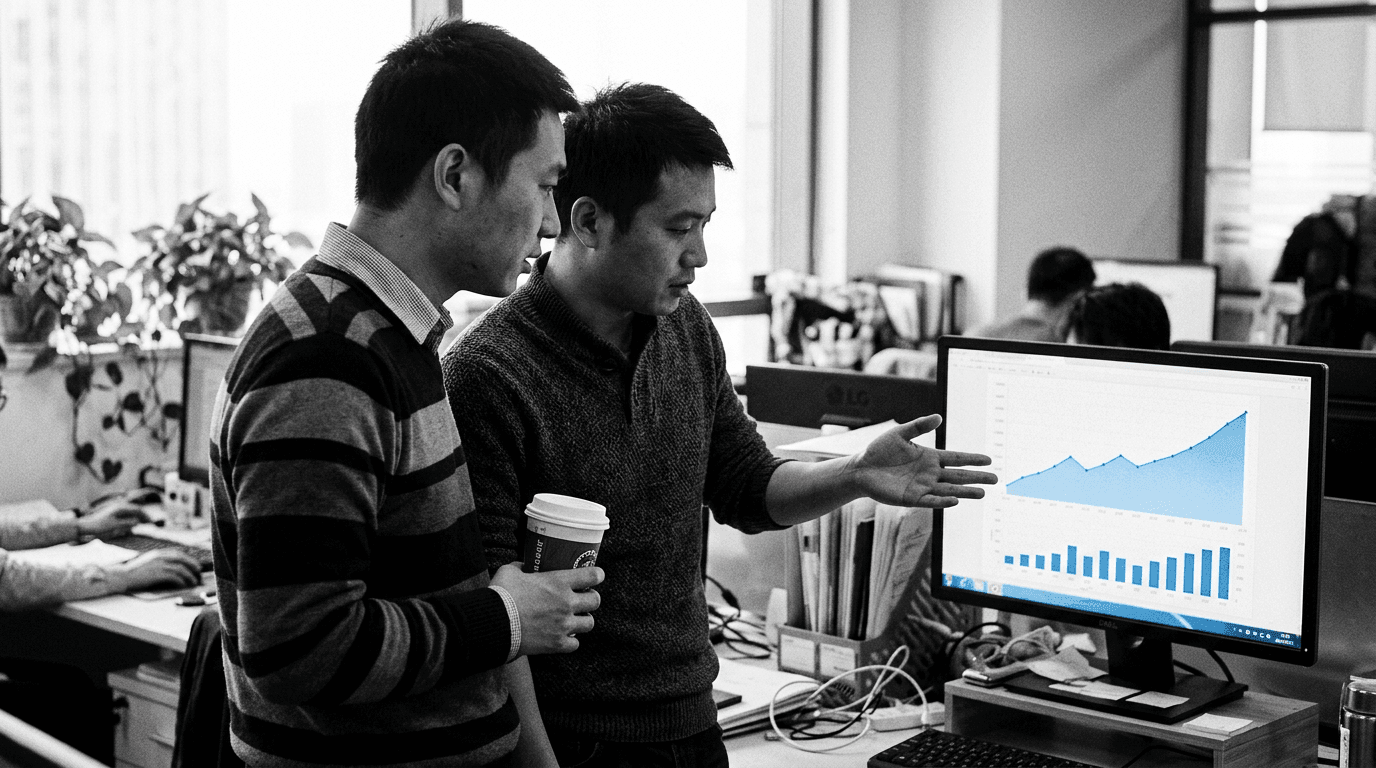
We optimize every week and report every month. When the data says the plan should change, we change it. We don't sit on a setup just because it's what we pitched you.
A working media operation that gets sharper every month, with the numbers to back it up.
- Weekly bid, budget and creative optimization
- Monthly review with senior strategist and buyer
- Festival ramp planning and post-festival debrief
- Quarterly creative refresh and audience rebuild
- Live dashboard with the same numbers we see
- Monthly report and quarterly business review
You get the dashboard too. Same numbers we're looking at, same time we're looking at them.
In China, the law decides what your ad can say.
Three rules catch foreign brands more than any others. The FAQ further down goes deeper on each.
The superlative ban
China's Advertising Law bans absolute claims. No "best," no "number one," no "highest grade." Fines run into the hundreds of thousands of RMB, and whether the claim happens to be true doesn't enter into it.
More in the FAQThe 2026 livestreaming rules
New this year: recordings kept for three years, no price superlatives without proof on hand, and shared liability for any agency that touches fake engagement.
More in the FAQData and PIPL
Moving Chinese customer data out of the country is a regulated transfer, not a default setting. It shapes what you can track and where that data is allowed to sit.
More in the FAQTwenty-five questions, answered straight.
The questions foreign brands ask us on the first call. Filter by topic.
Operations Who owns the ad accounts and the data?
You do. We set up the Tmall, Douyin, Baidu, and WeChat ad accounts in your brand's name wherever the platform allows it. Pixels, audiences, campaign history, performance data, all of it belongs to you. Stop working with us and you keep the lot, no exit drama. We ask about this first because it's usually the first thing a client who's been burned before asks us.
Cost What's the minimum budget to run media in China?
Realistically, around 100,000 RMB a month, call it 14,000 dollars, to run one platform properly with creative and optimization behind it. You can spend less. You just won't learn much from it. For a multi-platform launch, plan on 500,000 to 2 million RMB across the first three months. Treat those as working ranges, not a quote. Your category moves them, sometimes a lot.
Cost How much does WeChat advertising cost?
Moments ads start somewhere around 50 to 120 RMB CPM, roughly 7 to 16 dollars, and tighter targeting pushes that up. Minimum campaign spend for Moments is usually 50,000 RMB. Official Account article ads and Mini Program banners come in lower, from about 15,000 RMB. Industry, targeting, creative quality, they all pull the number around.
Cost How much does Douyin advertising cost?
In-feed video CPM usually runs 30 to 60 RMB, about 4 to 8 dollars. The technical minimum is 50 RMB a day per ad group, but that's not a real campaign. Budget at least 10,000 RMB so the system has enough to optimize against. TopView and Brand Challenges are a different world, hundreds of thousands of RMB.
Cost How much does RED (Xiaohongshu) advertising cost?
Feed ad CPM starts around 40 to 100 RMB, roughly 6 to 14 dollars. Search ads run on cost-per-click, usually 1 to 5 RMB a click. KOC seeding starts around 300 to 1,500 RMB a post. KOL campaigns are a wide range: about 5,000 RMB for a small creator, several hundred thousand for a top-tier name.
Cost How much does Baidu SEM cost?
All down to the keyword. A generic term might be 1 to 3 RMB a click. A competitive one in insurance, education, or medical can run 30 to 100 RMB. Baidu Brand Zone, the premium branded result, starts around 200,000 RMB a year for most categories.
Cost How is your pricing structured?
Project fees for setup, monthly retainers for ongoing management, and media spend passed through at cost. No hidden margin on the media itself. We'll show you the platform invoices if you ask. Minimum monthly retainer is 5,000 dollars.
Platforms Which platform should we start with?
Depends on the product and who's buying it. Skincare and fashion usually start on RED. Fast-moving consumer goods and quick-decision purchases go to Douyin. B2B, finance, anything high-consideration leads with WeChat and Baidu. We pick based on where your buyer actually decides, not where the buying is easiest for us.
Setup Can we run ads in China without a China-registered business?
Yes, through cross-border ad accounts. Douyin, WeChat, RED, and Baidu all take overseas advertisers. Expect extra verification and slightly higher rates. Setup runs two to four weeks and needs business documents, a brand authorization letter, and whatever certifications your category requires.
Setup How long does account setup take?
WeChat, two to three weeks. Douyin, one to two weeks for standard categories, four to six for regulated ones like cosmetics, food, or health. RED, two to four weeks. Baidu, one to two weeks. Regulated categories always take longer because of the pre-approvals. There's no way to rush that part, and you wouldn't want to.
Setup Do we need a Chinese landing page?
Almost always, yes. Sending paid traffic to an English-language site kills your conversion rate. The page needs to load inside China, in Chinese, with Chinese payment options where they apply. We build these, or we adapt what you've got.
Setup How fast can we go live?
Standard category, simple creative, one platform: about three weeks from signed agreement to live ads. Regulated category, several platforms, full creative production: six to ten weeks. We don't shortcut the compliance step. That shortcut is exactly what gets accounts suspended.
Operations How do you measure performance?
The usual digital KPIs all apply: CPM, CPC, CTR, cost per acquisition, return on ad spend. On top of those we track the China-specific signals that tell you more. WeChat follower conversion cost. Douyin live-room entry rate. RED's save-to-impression ratio. Baidu brand search lift. We agree the KPIs up front, then report against them every month.
Operations How does attribution work across Chinese platforms?
Mostly it doesn't, at least not the way you're used to. These are walled gardens. Each platform reports its own conversions and cross-platform attribution is genuinely hard. We use platform-native pixels, UTM tags where they hold up, and post-purchase surveys for high-value categories. We'd rather be honest about that than sell you a dashboard that pretends it's solved.
Operations Can we use the same creative on WeChat, Douyin, and RED?
No. Each platform has its own voice, format, and audience expectation. Douyin wants fast cuts and a hook inside two seconds. RED wants slower, lifestyle-led content that reads like a real user's post. WeChat sits between them, more brand-led. We adapt or rebuild for each one.
Operations How do you handle creative production?
In-house studio. Photo, video, copy, motion graphics, with Chinese writers, editors, and designers doing the work. We also use AI-generated content tools to cut time and cost on the high-volume stuff, like product photo variations and short-form video edits. The judgment stays human. The grunt work doesn't have to be.
Operations Are KOL and KOC partnerships part of media buying?
Yes, and more so every year. On RED and Douyin, paid spend behind KOL content often beats a straight ad. We treat KOLs and KOCs as part of the media plan, not a separate line item someone else handles. We source them, brief them, contract them, and amplify what works.
Platforms What about livestreaming on Douyin and Taobao?
Live commerce is its own channel with its own skill set. Paid traffic into live rooms means Qianchuan on Douyin, Wantwang on Taobao. We run it for clients with the right product and the right margins. Not every brand should be livestreaming, and if yours is one of them, we'll say so rather than take the budget.
Operations How do you handle platform algorithm changes?
We rebuild the segments and test fresh creative. Algorithm updates on Douyin and RED happen a lot. We won't promise that last quarter's setup carries into this one. What we promise is that we'll catch the shift fast and move on it fast.
Compliance What categories are restricted or banned from advertising in China?
Tobacco and prescription drugs, banned outright. Alcohol, finance, healthcare, infant formula, cosmetics, medical devices, all heavily restricted. Education, gambling, and crypto are effectively banned. We check whether your category is even eligible before we pitch you a media plan, not after.
Compliance What words are banned in Chinese ad copy?
The absolute terms: best, top, number one, highest, most, national-level, world-class, and anything in that neighborhood. The official list isn't complete, so enforcement catches phrases you wouldn't expect, and it doesn't matter whether the claim is actually true. Health claims, medical-treatment language, and guaranteed-result wording are restricted on top of that. Fines run from 200,000 to 1 million RMB. We write copy that stays well clear.
Compliance Can we send Chinese customer data back to our global CRM?
Not automatically, no. Under China's Personal Information Protection Law, moving personal data out of the country is a regulated cross-border transfer. It needs a legal basis, user consent, and in some cases a security assessment. This holds even if your company has no entity in China. We set up tracking and data flows that stay inside the rules, and we're straight with you about what can and can't leave the country.
Compliance What changed with livestreaming rules in 2026?
Three things that matter for media. Livestream recordings have to be archived for at least three years. Influencers can't use price superlatives, the "lowest price anywhere" kind of line, without verifiable proof on hand. And agencies that facilitate fake engagement now share legal liability with the creators they hire. We run livestream campaigns inside those rules, and we only work with creators who do the same.
Compliance What is a professional whistleblower, and why does it matter?
China has a population of professional complainants. They scan ads for legal violations, especially superlative language and unsupported claims, then file reports for a financial reward. They work at scale. For a foreign brand, that means one non-compliant word in your copy can trigger a real investigation and a real fine. It's one more reason we get the copy right before anything goes live.
Platforms Can you help with Hong Kong and Taiwan media?
Yes. Hong Kong runs on Google, Meta, and local platforms like HK01. Taiwan runs on Facebook, Line, and Dcard. Different ecosystems, different teams. We have experience in both, kept separate from mainland China.
Ready to put your China media budget in senior hands?
Start with a media audit. We'll look at what you're running now, or what you'd need to get started, and come back with a straight read: what's working, what isn't, what we'd do differently. No deck full of jargon, just the actual picture. Got a brief already? Send it over.