

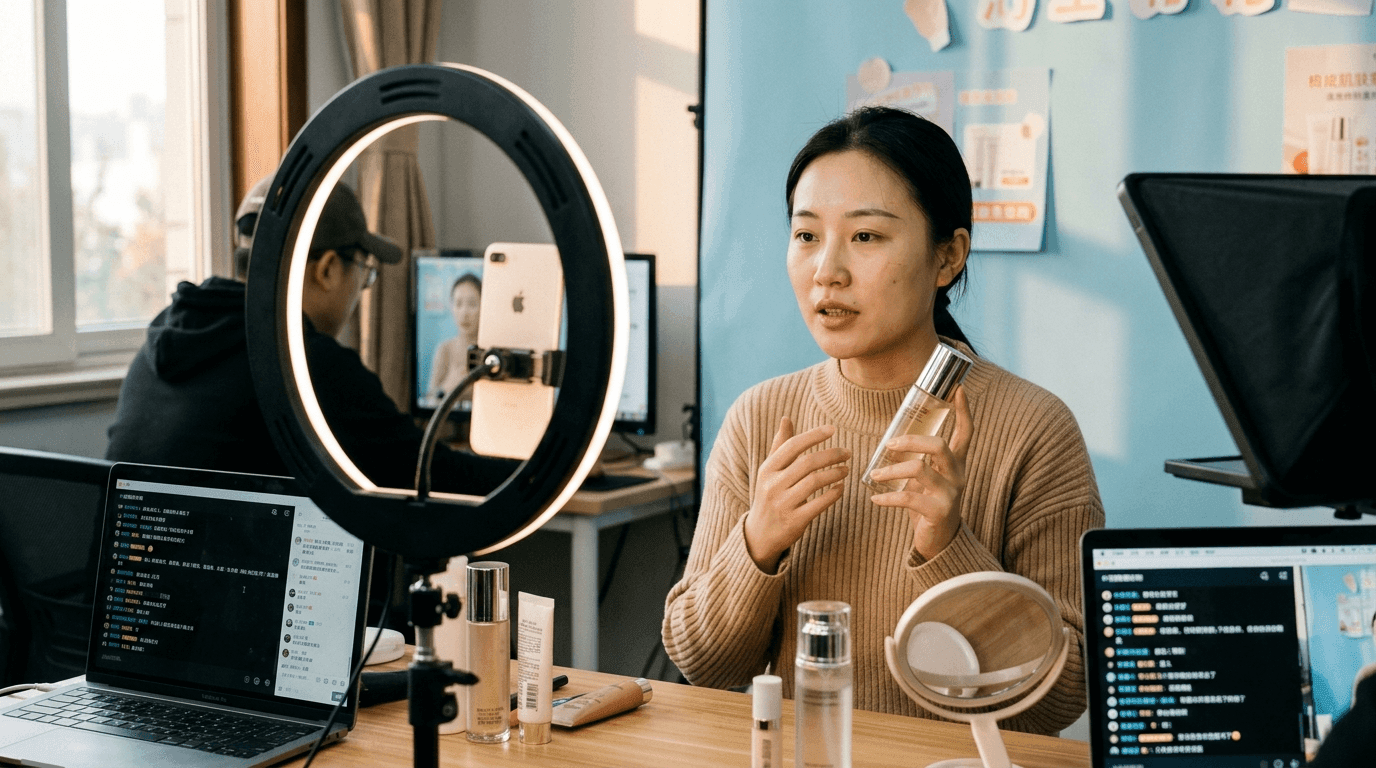
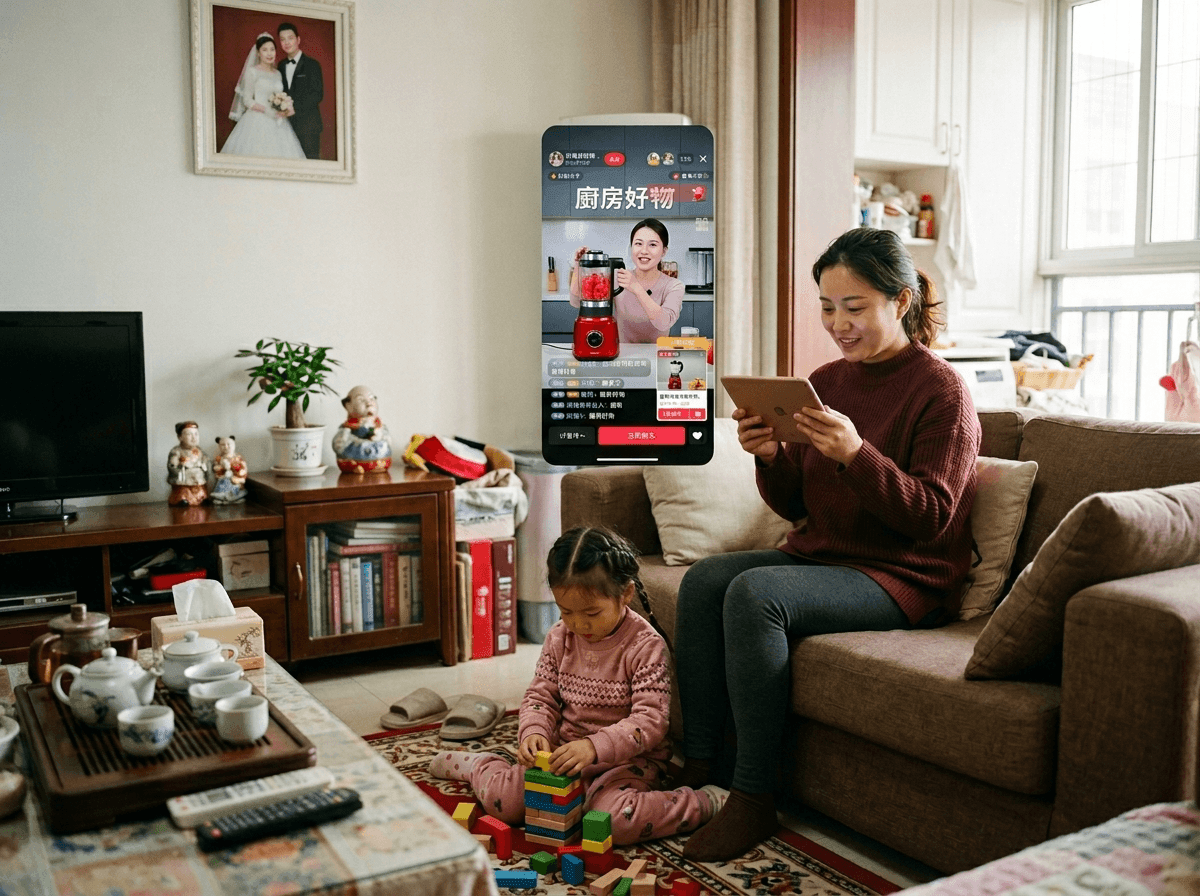
In China, people don't go to the store. The store comes to their feed. We run that operation.
Social commerce in China isn't a layer on top of e-commerce. It's the primary way most consumer brands sell here now. We run it for global consumer brands. The whole operation, not the deck.
Two things to know before we touch your social commerce
Most brands approach Douyin and RedNote the way they approach any new market. Neither platform rewards that approach. Two things shape how we work instead.
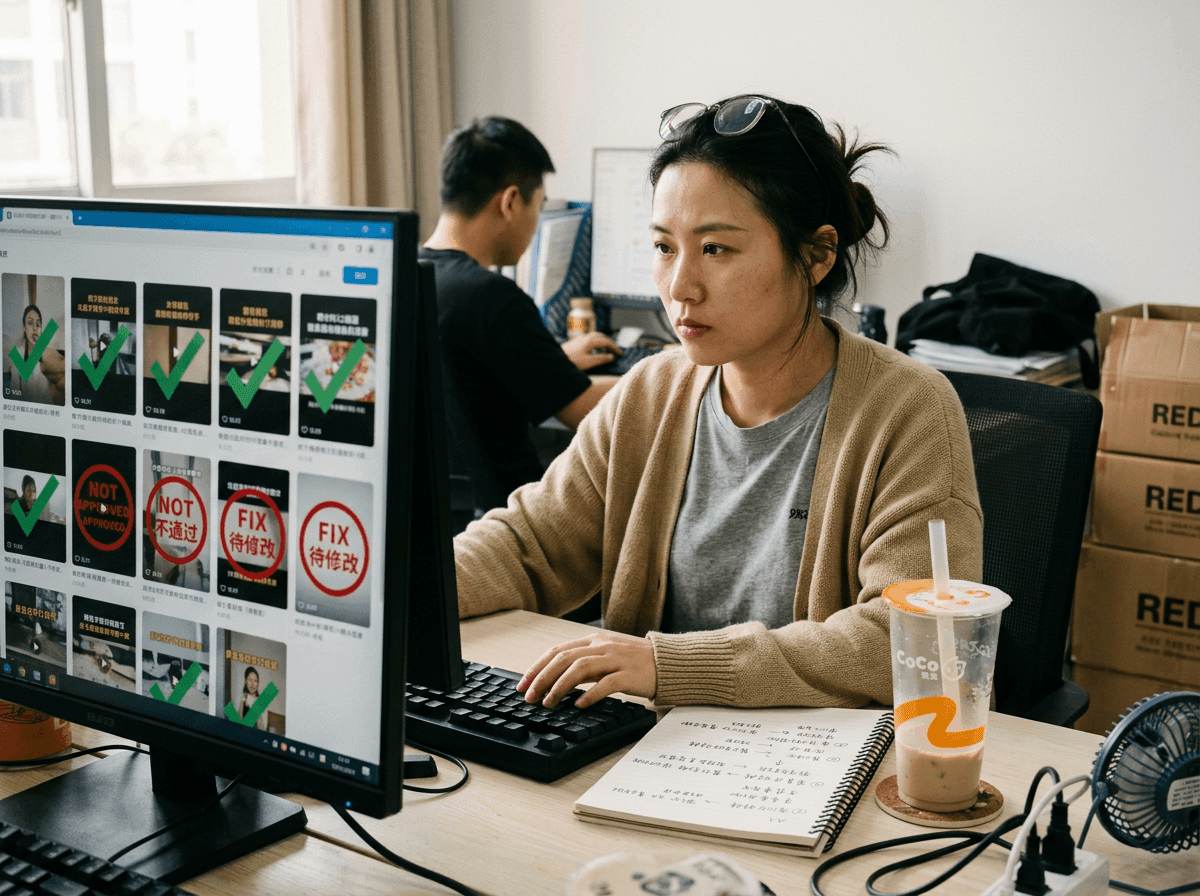
Producers, editors, host, all in one room
Content is the sales team
Weak content means weak sales. If a shopper scrolls past in two seconds, the product never gets seen. We shoot it ourselves, in Mandarin, every day.
- Shoot
- Edit
- Ship
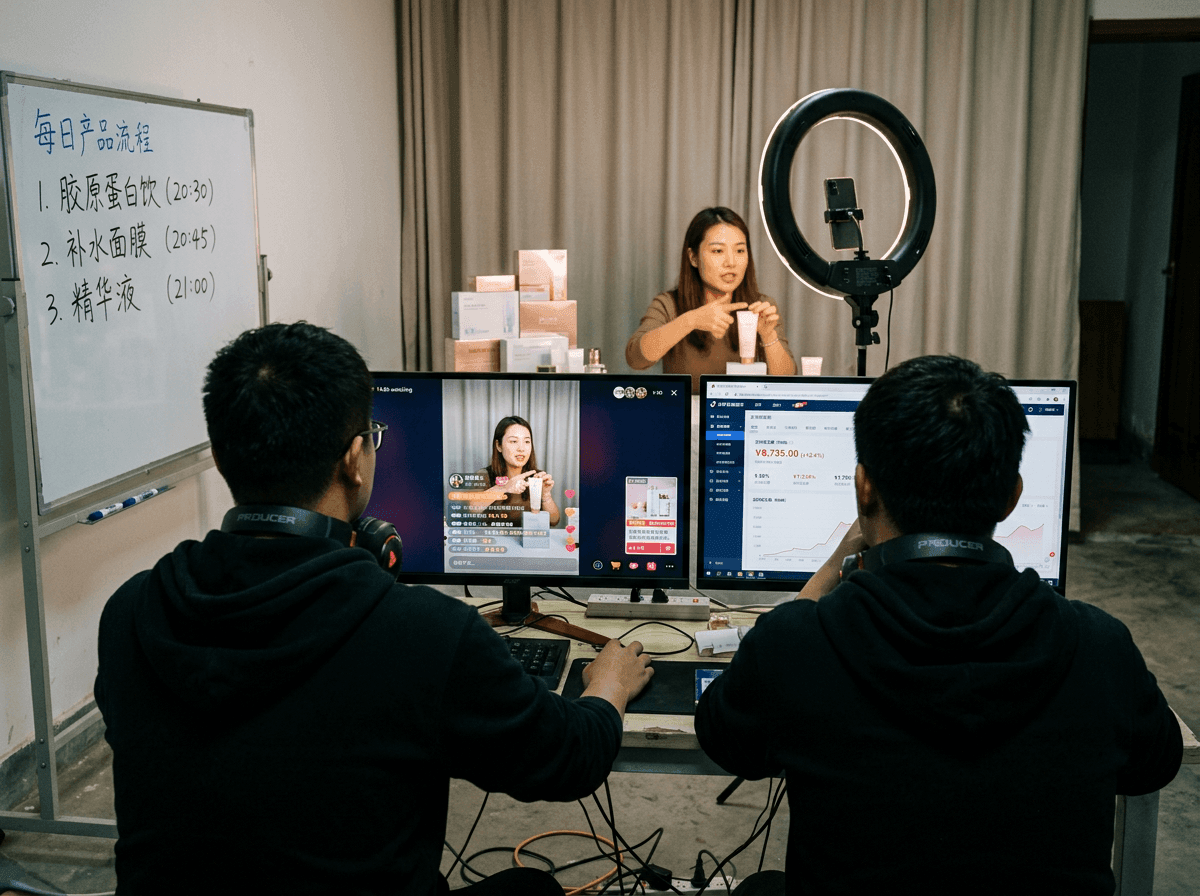
Eight to twenty livestreams a month
A daily operation, not a campaign
Douyin stores need daily posts, weekly livestreams and ads behind both. The algorithm punishes silence.
Most social commerce agencies have never run a store. We have.
Our team comes from Publicis Commerce China. We have built and run Douyin and RedNote stores for global consumer brands. We know which creators convert because we have briefed them. We know what Qianchuan rewards because we have spent against it every day.
Most of the consultants who talk about Douyin and RedNote have never actually run a store on either one. We have, and that changes what we tell you.
We have lost an 11.11 and won the next one. When we tell you what works in March, it is because we were inside the platform in February.
Meet the team- What you can expect
-
Senior operators run the account
Strategy and execution by the same people. No junior handoff once the contract is signed.
-
Phased commitment
Start with one platform. Add the next when the first one works. No 12-month all-in deals.
-
Independent creator sourcing
We do not take kickbacks from creators or agencies. Your interests sit on our side of the table.
Six things, run by one team
Not four agencies, four briefs and four invoices. One operator across content, commerce, creators and media. The strategy that goes into the deck is the one that runs on the platform on Monday.
Platform operations
We run your stores and accounts on Douyin, RedNote (Xiaohongshu), WeChat and Weibo, plus WeChat Channels and Douyin Mall. Daily posting, content, customer service, ad management.
Learn moreCreator and KOL programs
A vetted roster across beauty, food and beverage, home, fashion, mother and baby, tech and lifestyle. We negotiate, brief, produce, and measure. And we will tell you when a creator is overpriced.
Learn moreLivestream commerce
Store-led livestreams on Douyin and Taobao Live, three to seven sessions a week. We staff the room, write the script, design the set, run the ads.
Learn moreContent production
Short videos, RedNote notes, livestream sets, product visuals. Shot in our Shanghai studio or on location, in Mandarin, with talent that fits the brand.
Learn morePerformance and ad operations
Douyin Qianchuan, RedNote effect ads, WeChat Moments, Weibo. We allocate, test, cut what is not working and put more behind what is. Weekly reports stay simple.
Learn moreMeasurement and reporting
Sales by SKU, by creator, by livestream, by ad. GMV, conversion, repeat rate. The numbers that actually tell you what to do tomorrow.
Learn moreWho owns the inventory. Two ways we run your social store.
The first commercial question on any Douyin or RedNote store is who owns the stock. That answer shapes the contract, the margin and how you book China revenue. We work in two models. Pick the one that fits how you want China on your books.
DP model
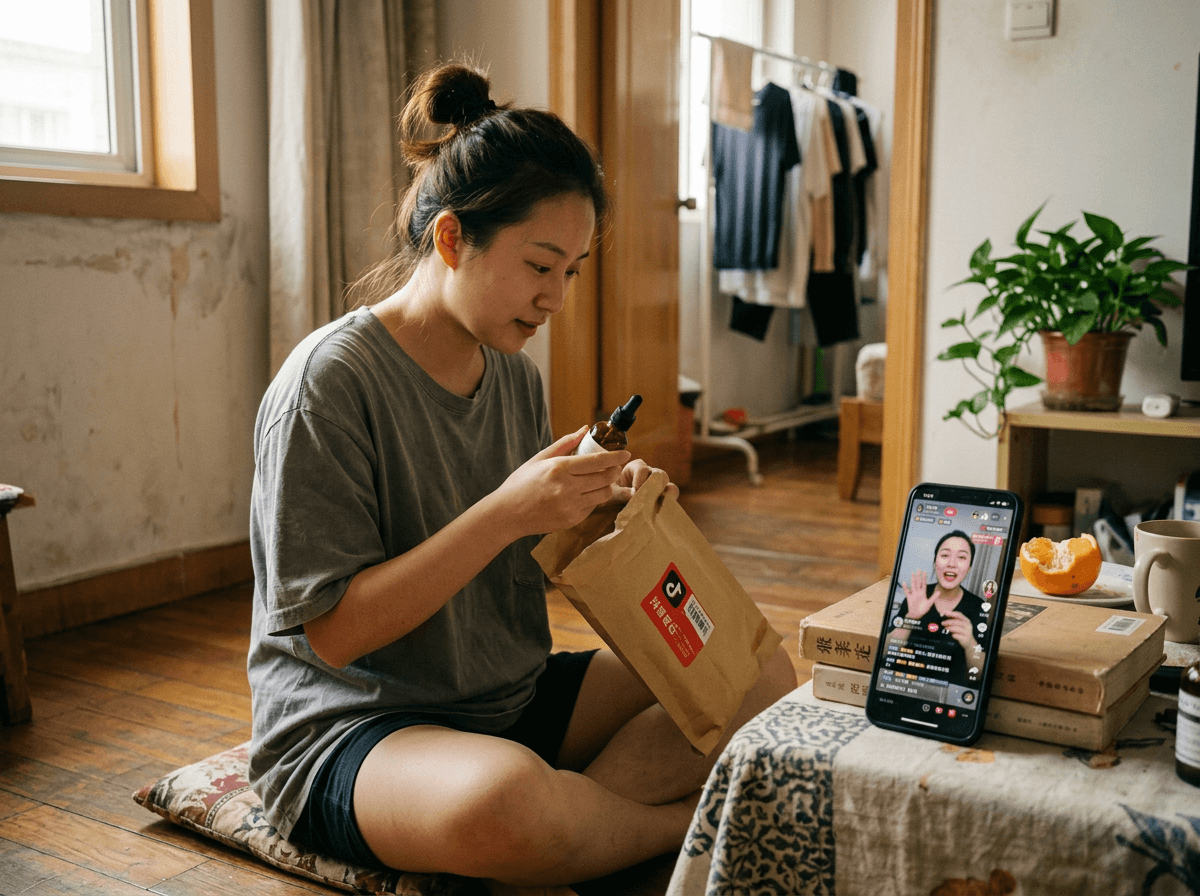
You keep the stock on your books and the customer relationship in your name. We act as your DP (Designated Partner) on Douyin EC and RedNote. Content, livestream, paid media, customer service, KOL and KOC programs: all run by us, all under your brand.
You want the China P&L on your own books, you want to build long-term brand equity on Douyin and RedNote, and you have the working capital to fund inventory plus media spend.
- Inventory Yours, in a bonded or domestic warehouse
- Store license Yours
- Customer data Yours
- Content, accounts, KOL contracts Yours
- Media and promotion spend 100% funded by you
- Revenue Direct-to-consumer GMV, on your books
- Full retail margin on every sale
- Direct visibility into customer data and CRM
- Brand control across the storefront, the feed and every livestream
- Monthly P&L review with the senior leads
- Daily store operations, listing updates, short-video calendar
- Livestream production, three to seven sessions a week, set, host and script included
- Paid media across Douyin Qianchuan and RedNote effect ads
- KOL and KOC seeding, negotiation, briefing and reporting
- Mandarin customer service and review moderation
- Platform compliance, content vetting, penalty negotiation
Distributor model
We buy your product at wholesale and own the stock in China. The Douyin and RedNote stores are run under our license, the inventory sits on our balance sheet, and we carry the commercial risk. You sell to us, we sell to the consumer.
You are already known in China, want the Douyin and RedNote revenue without the operational complexity, and would rather not tie up cash in inventory. New-to-market brands rarely fit this model.
- Inventory Ours
- Store license Ours
- Customer data Ours
- Content, accounts, KOL contracts Ours
- Media and promotion spend Brand budget + BBG co-invest
- Revenue Wholesale invoice, recognised as B2B
- Wholesale revenue with no inventory risk
- A single B2B invoice instead of a direct-to-consumer P&L
- No working capital tied up in China stock
- Aggregated performance reporting and category insight
- Inventory purchase, financing and warehousing
- Everything in the DP model, plus the commercial risk
- Pricing strategy on Douyin and RedNote within agreed brand guardrails
- Returns, refunds, customer service liability
One question, two answers
Do you want to own the customer relationship on Douyin and RedNote, or do you want a clean wholesale exit? That is what decides the model.
| DP model You own the inventory | Distributor model We own the inventory | |
|---|---|---|
| Who owns the inventory | You | BBG |
| Who owns the store and the data | You | BBG |
| Working capital you put in | High | None |
| Revenue you book | Retail GMV minus fees | Wholesale price |
| Margin upside | Full retail margin | Capped at wholesale |
| Risk you carry | Stock and demand | None on inventory |
| Media and promotion costs | 100% on you | Brand budget + BBG co-invest |
| Brand equity on Douyin and RedNote | Yours, fully | Yours, built through us |
| Best for | Brands building long-term China social commerce | Brands already known in China |
The model that fits depends on two things: how big you want China social commerce to be in your global revenue, and how much cash flow you can put behind that ambition. Brands with high ambition and the working capital to fund inventory and media usually pick DP. Brands wanting steady China revenue without tying up cash usually pick distributor. Some brands run both in parallel across different categories. None of this is a maturity ladder.
Four rhythms that run your social commerce
Once the model is set, the work does not stop, it just changes shape. Four rhythms run in parallel, all year.
Content and community
Your feed stays alive. The algorithm rewards consistency, and silence costs reach faster than most brands expect.
Your feed stays alive, week after week, with a content rhythm the algorithm actually rewards.

- Daily short-video posting on Douyin and RedNote
- Comment moderation and DM response in Mandarin
- Trend monitoring and rapid-response content
- UGC and KOC content sourcing
- Weekly content calendar
- Daily community report
Livestream
Store-led livestream is the weekly rhythm that builds a real revenue line. Not a celebrity event once a quarter. A working room, three to seven nights a week.
A predictable revenue line, week after week, not just on festival days.
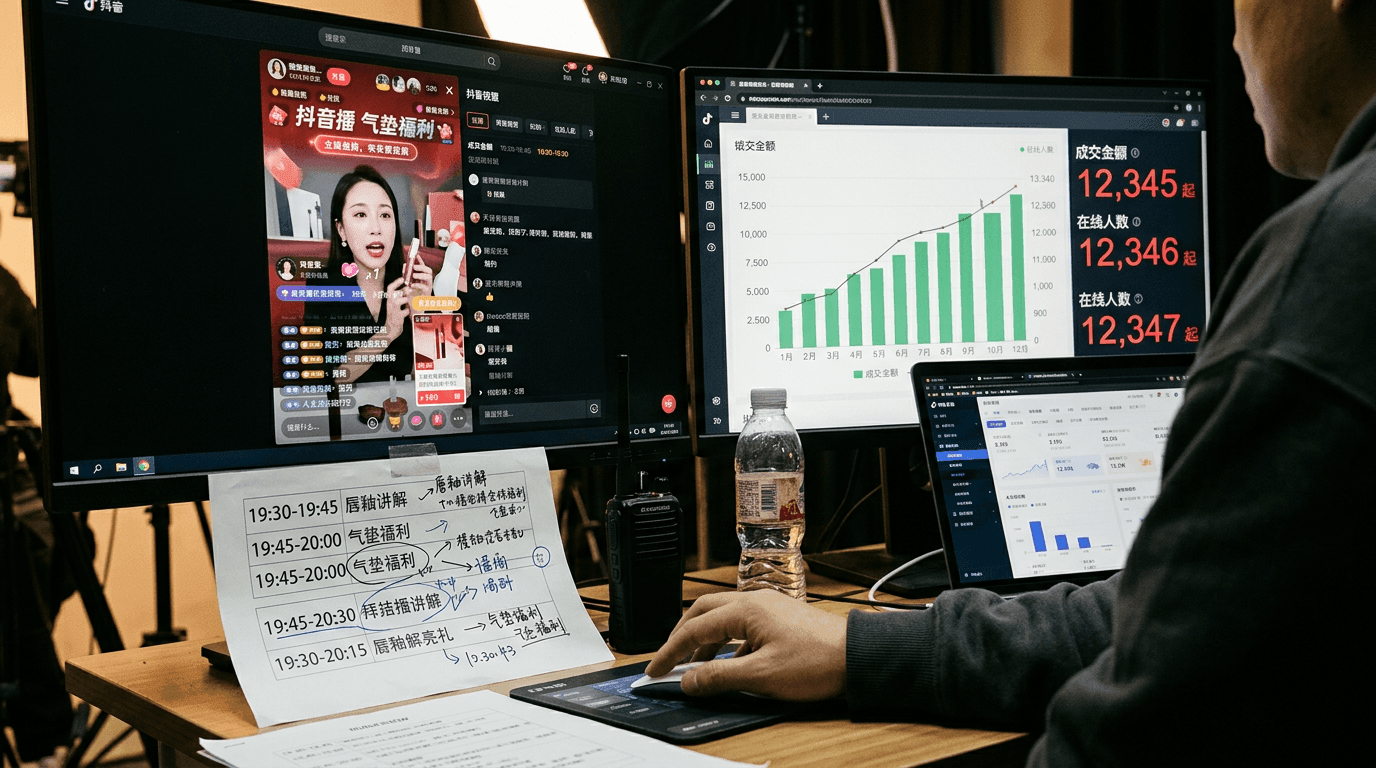
- Three to seven Douyin livestream sessions per week
- Script writing, host briefing, set design
- Real-time Qianchuan optimization behind the stream
- Post-livestream sell-through and SKU performance report
- Weekly livestream sell-through report
- Monthly host performance review
KOL and KOC campaigns
The creator layer. We brief, negotiate and measure across a vetted roster, and we tell you when a quote is inflated. Most of them are at the moment.
Awareness, trust and conversion at scale, without overpaying for it.

- Creator shortlist sourced from our vetted roster
- Brief, content review, negotiation and payment
- Seeding programs with 20 to 40 KOCs a month
- A couple of KOL collaborations a month, sometimes up to five
- Monthly creator performance report
- Cost-per-acquisition by creator
Festival push and measurement
The big moments (11.11, 6.18, Women's Day, CNY) carry their weight. Festival prep starts six months out, not the week before. Then the report tells you what to change for the next one.
Festivals carry their share of the year. The post-mortem tells you what to change for the next one.
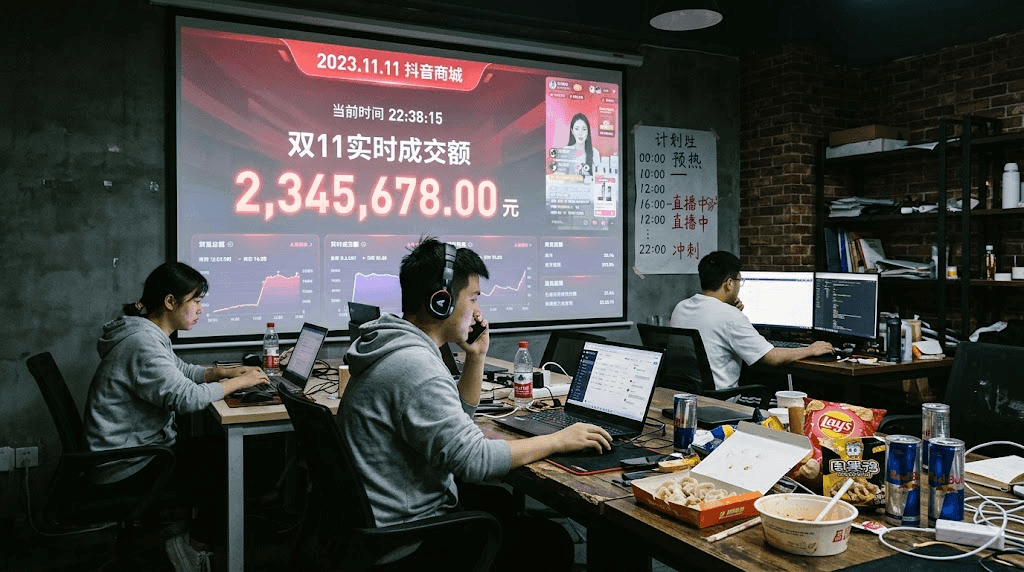
- Festival plan built six months out
- Inventory, pricing and promotion mechanics
- Pre-festival traffic build, festival day operations, post-festival CRM
- Daily reporting during the festival window
- Festival plan deck
- Post-festival report with year-on-year comparison
Powered by TheRedScroll
Some brands want a Chinese social presence (WeChat, Weibo, Douyin content, RedNote notes) without the full commerce operation behind it. TheRedScroll is our sister agency built for exactly that. Daily content, community and KOL seeding, without a storefront sitting underneath.

Off-platform social, run by the same operators.
When the store is not the priority but the brand still needs to show up in the feed, TheRedScroll handles the content and the community. Same group, same standards, separate brand, smaller monthly retainer.
- 4 channels covered: WeChat, Weibo, Douyin, RedNote
- 25+ years of Chinese social experience inside the group
- In-house native team, content shot in studio
WeChat and Weibo
Daily content, community, and KOL seeding on the platforms where considered purchases still live. For brands where trust matters more than impulse buys.
RedNote and Douyin content
Short videos, notes and creator partnerships, without a storefront behind them. For brands building awareness ahead of a future commerce launch.
Always-on social retainer
A single monthly fee that covers the four channels. Run by the same operators as your commerce, on a lighter scope.
What this looks like running for a brand.
Eighteen months of WeChat, Weibo and RED for Camper. Craft-led storytelling, design partnerships and a tight micro-influencer roster. Eight-figure RMB retail in tier-one cities followed the audience growth.
- 43k → 187k Combined followers, three platforms
- +330% Audience growth across WeChat, Weibo, RED
- 38% Of eCommerce traffic came from RED alone
Twenty questions, answered straight
The questions we get on the first call, with the answers we give once we know the brand. Filter by topic.
Strategy What is the real difference between e-commerce and social commerce in China?
E-commerce is search behavior. A shopper already knows what she wants and goes to Tmall or JD to find it. Social commerce is discovery behavior. She did not know she wanted it until the feed showed her. Different mindset, different content, different metrics. Most brands need both, but they need to know which one drives the business.
Platforms Which platforms should we be on first?
Depends on the category. Beauty and lifestyle: RedNote first, Douyin second. FMCG and food: Douyin first. B2B and considered purchases: WeChat. Premium and luxury: RedNote and WeChat. Trying to be on all four platforms in month one is the most common mistake we see. You spread thin and you win nowhere.
Cost How much does it cost to launch on Douyin or RedNote?
Setup runs roughly 80,000 to 150,000 RMB depending on store complexity and content needs. (We have done one launch for less, but it cut corners we now regret.) Monthly operations run 50,000 to 250,000 RMB depending on content volume, ad management, and livestream frequency. Media spend sits on top of that. Plan for at least 100,000 RMB a month in media for the first six months while you learn what actually works for your category. Add the platform deposits: 30,000 RMB for Douyin and 20,000 RMB for RedNote, both refundable.
Cost What does Tmall Global cost on top of that?
A 30,000 USD deposit, a 5,000 to 10,000 USD annual service fee depending on category, and a commission of 2% to 5% per transaction, plus a 1% Alipay fee. Cross-border, so no Chinese entity required.
Strategy How long before we see sales?
On Douyin, first sales come within weeks if you run paid traffic. Profitability takes three to six months. On RedNote, brand build comes first. Sales follow at six to nine months. Anyone promising faster is overselling.
Operations When should we start preparing for 11.11 or 6.18?
Six months out. The Chinese shopping festival calendar is the single most underestimated planning constraint we see with foreign brands. 11.11 prep starts in May. 6.18 prep starts in December. Brands that walk in three months out get the leftover ad inventory and the leftover KOL slots, both at premium prices.
Strategy Do we need a China-based legal entity?
Not always. Cross-border models (Douyin Cross-Border, Tmall Global, JD Worldwide) do not require one. Onshore Douyin, Tmall, JD does, or a TP partner who provides one. We can run either. And if you already have a WFOE that was set up for offline trade and now needs to do digital commerce, we will tell you whether to amend the business scope, set up a second entity, or stay cross-border. The wrong setup costs more than the right one ever did.
Operations Can we just use our global content?
Almost never. Lighting, pacing, voiceover style, on-screen text, color grading, even the way hands are framed on camera. All different. Chinese shoppers spot translated foreign content in two seconds and scroll past. We re-shoot or re-edit for the local platforms.
Creators What is a KOL versus a KOC?
KOL: Key Opinion Leader. Big follower count, higher fee, awareness driver. KOC: Key Opinion Consumer. Smaller audience, more authentic, conversion driver. Most campaigns need both. KOCs do the volume. KOLs do the credibility.
Cost How much do KOLs actually charge?
A mid-tier RedNote creator with 100,000 followers runs 15,000 to 40,000 RMB per note. A top-tier Douyin host runs 200,000 to 2 million RMB per livestream slot, plus a commission of 20% to 30% of GMV. Pure-commission deals exist with smaller hosts but margin gets thin fast. We benchmark every quote against the live market, because the rates move month to month.
Creators Is a celebrity livestream worth it?
Almost never. The big-name livestreams produce a spike followed by silence, and an inflated cost-per-acquisition that looks great in slide three of the campaign report. Store-led livestreams running three to seven sessions a week build a predictable revenue line. We recommend the second, nearly every time.
Operations How do we handle returns and customer service?
Chinese platforms require fast response, under one minute on Douyin during peak hours, and a high return tolerance. The 7-day no-reason return is standard. We run customer service in Mandarin, on platform, with response-time SLAs. Returns go through our warehouse or yours.
Operations What about content censorship?
Specific words, claims, and images get flagged or blocked. Health claims. Direct comparisons with competitors. Certain political and cultural references. We vet every piece of content before it goes live. Mistakes cost the account, and sometimes the account does not come back.
Cost How are payments handled?
WeChat Pay and Alipay dominate. Platforms collect on your behalf and settle on a schedule, usually weekly or every 15 days. Cross-border models settle in USD or EUR to your overseas account. Onshore models settle in RMB to your Chinese entity.
Strategy Can we run a campaign without setting up a Douyin or RedNote store?
Yes, for awareness. KOL seeding, brand notes, livestreams hosted by creators selling from their own stores. You will not own the customer or the data, but it is a valid way to test demand before opening your own store.
Platforms What does a typical content calendar look like?
On RedNote: 8 to 15 notes a month from the brand account, 20 to 40 KOC notes, 2 to 5 KOL notes. On Douyin: 15 to 30 short videos a month, 8 to 20 livestream sessions. Volume is not optional. The algorithms punish silence.
Strategy How do we measure ROI?
Three numbers we track every week: cost per acquisition, GMV per livestream hour, content engagement rate. Three numbers every month: repeat purchase rate, total media ROAS, brand search lift. Everything else is supporting detail.
Cost What goes wrong most often?
Three things, mostly in this order. Brands underinvest in content production. Brands hire one cheap creator and expect a whole campaign to deliver. And brands stop spending after month two because the results are not there yet, which kills the momentum right before it would have started to compound. We have watched this play out maybe a dozen times in the last two years.
Platforms Do we need to be on WeChat if we are already on Douyin and RedNote?
For B2C, you can probably skip WeChat in year one if the budget is tight, with one caveat: WeChat Channels has turned into a real social commerce surface over the last 18 months, and the gap with Douyin closes every quarter. For B2B, premium, and any brand selling a considered purchase, WeChat is not optional. That is where high-value customers stay long enough to buy a second and a third time.
Platforms How do we get started with you?
A 30-minute call with our senior team, no junior intermediary. You tell us the category, the budget range, and the timeline. We tell you what is realistic, what platforms to start with, and what the first 90 days look like. No proposal until both sides agree the project makes sense.
Ready to sell where China actually shops?
Tell us the category, the budget range, the platforms you are considering and whether you are aiming at a festival window or a steady-state launch. A senior member of the team replies within one working day. You will not be passed through a sales funnel or an auto-responder.